
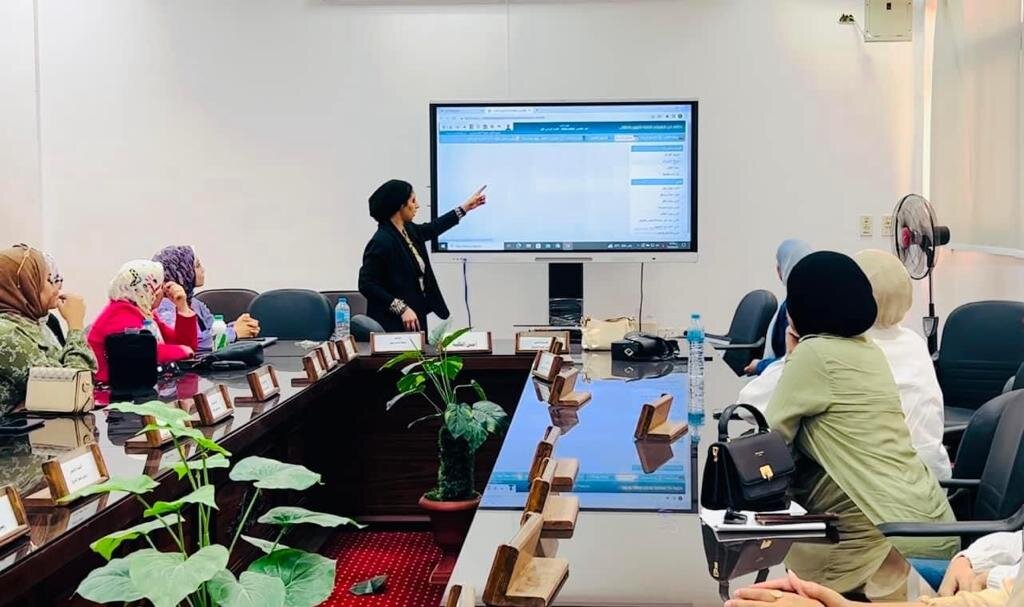
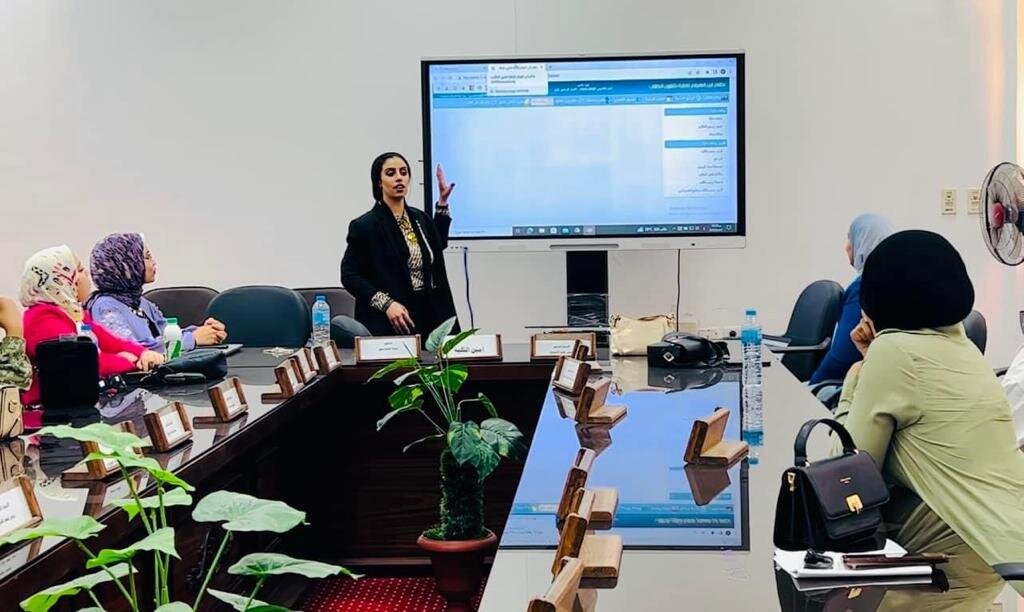
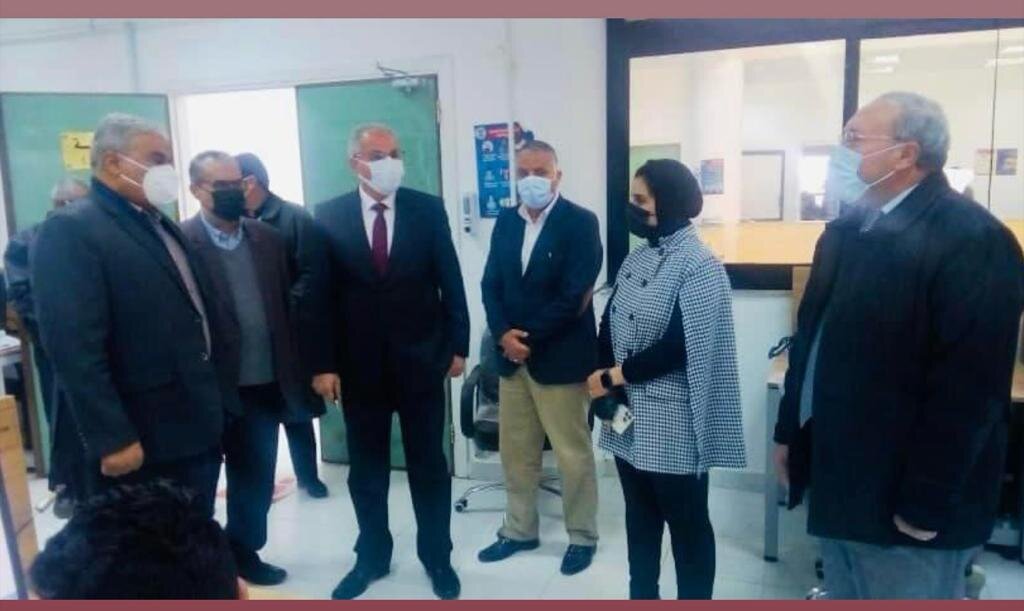
The public service center's role is English- Arabic translation and vice versa. It is also concerned with French-Arabic translation and vice versa. Moreover, it organizes training courses for whoever is interested in Languages, translation, and ICDL.
The center organizes GIS courses for the students, such as geography and measurement courses.
This center takes full responsibility for taking care of disabled students by answering their inquiries, solving their problems, and ensuring they receive a healthy educational experience.

The center organizes human resources and environment-related courses for the students at the faculty.
Our special units have a tremendous role in developing the community.
- Working on matching needs of special needs from faculty’s students, along all sides: scientific- social- entertainment.
- Organizing regular workshops that educates languages in a continuous way.
Center’s activities
- Providing (20) mouthpiece computer devices, supported with (20) speaking programs for blind students, which enables blind students from reading and writing lectures and record books.
- Offering cultural services.
- Providing wheelchairs for other disabilities.
- Providing books.
- Providing financial and supply assistance for students, after doing needed research about their status.
Consulting and human development researches
- Doing workshops in human development in coordination with civil authorities and governmental authorities.
- Implementing lectures and instructiveness symposiums about environments and local community.
- Offer consults tackling human development and statistical analysis.
- Provide safety and security for all human resources (Staff members- students- employees- workers).
- Planning to take in consideration safety measures, to secure faculty’s buildings and members against fires, crisis and disasters.
- To achieve guidelines of safety and security.
- To spread awareness of crisis management and train faculty’s members on how to deal.
- To predict possible crisis that may happen inside the faculty and specify protection methods.
- Studying periodical reports that includes crisis, disasters, how to get over them and how to take advantage from them.
- Providing support and needed care for excellent and talented students.
- Promoting weak students’ levels and giving academic guide, which enables them to achieve progress in their academic year.
- Contributing in creating scientific and sociable atmosphere inside the faculty.
- Following up exams.
- Applying electronic correction system.
- Putting questions and doing questions bank.
- Training students and staff members on latest measurement and assessment methods.
- To enhance and improve efficiency of internal information network of the faculty.
- To promote infrastructure in information technology and up-date it regularly.
- To minimize usage of operation systems, programming and keep devices safe from viruses.
- To work on developing educational process, by supporting interaction between students and staff members.
- To use University E-mail address among all administrative actions and communicating with students.
- To use faculty’s official web-site, as to contact with all stakeholders.
- To replace all paper transaction with electronic transactions.
- To increase usage of electronic library and to take advantage from its un-limited number of services for researchers and students.
- To up-date activities and staff members data, by up-loading their curriculum vitae on faculty’s web-site.
- To highlight faculty’s role in enhancing efficiency of scientific research through social media.
As a special unit, it offers number of community services which are:
- Interaction with all different university authorities (cultural- Scientific- Social- intellectual).
- Perfect usage to staff members’ abilities in developing community.
- Doing researches that serves community and develop environment.
- Training of cadres and rehabilitee them to labor market.
Vision:
The Quality Assurance Unit at the Faculty of Arts and Humanities aspires to apply the national standards of quality and raise the quality of education, leading to Program Accreditation.
Mission:
The Quality Assurance Unit seeks to implement an internal system of quality to monitor and evaluate the performance of the faculty, to apply comprehensive quality, to continuously improve the performance of the faculty, and to gain the trust of the society in the faculty graduates in light of the standards of the National Authority for Quality Assurance and Accreditation of Education.
Goals:
The Quality Assurance Unit aims to adopt mechanisms for follow-up and performance evaluation of all the educational, research, and service activities of the faculty in light of the standards of the National Authority for Quality Assurance and Accreditation in order to achieve the mission and goals of the faculty through:
- Disseminating the culture of quality within the faculty community (staff members – administrative staff – students).
- Meeting the standards of the National Authority for Quality Assurance and Accreditation of Education.
- Qualifying the faculty to obtain accreditation.
- Implementing the internal audit system for the faculty programs.
- Establishing a system for measuring and evaluating the performance of the faculty.
- Developing continuous improvement plans for the academic and administrative development of the faculty.